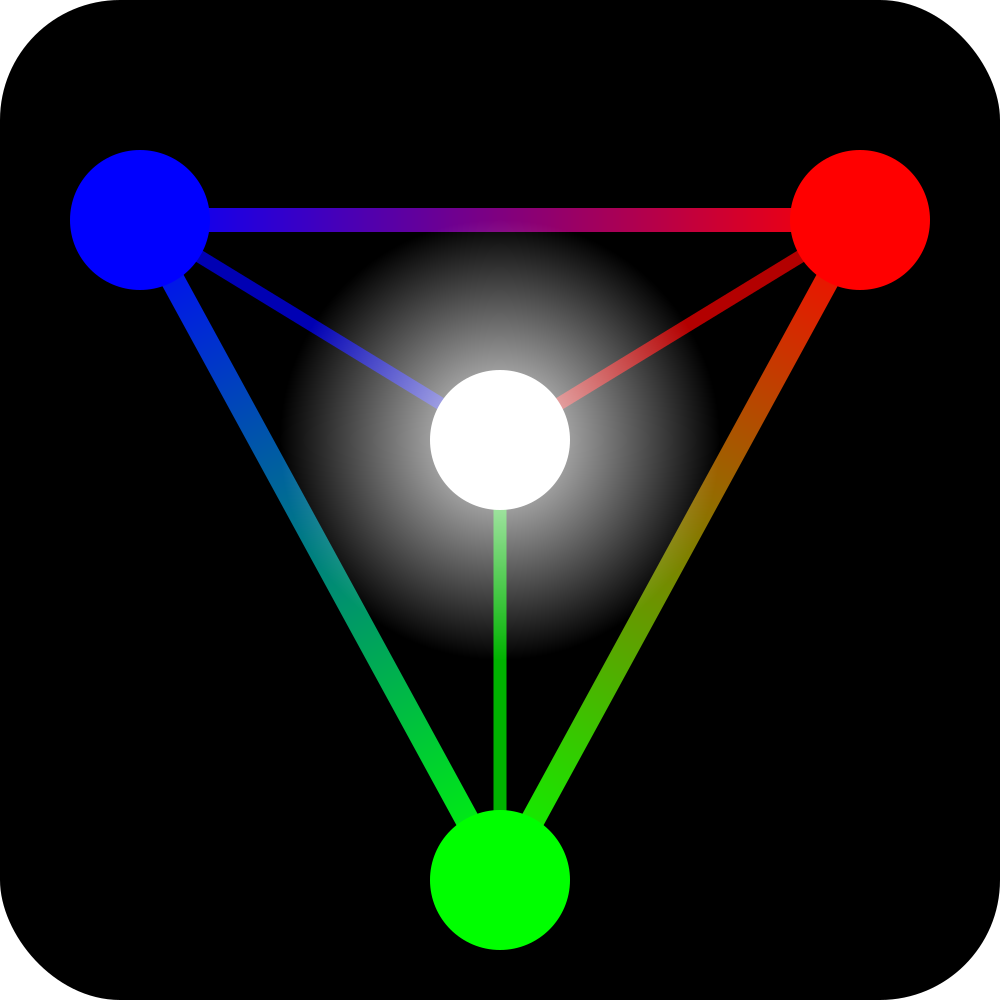
Every value has one. Some boundaries exist to keep a value from being violated, or to stop a violation in progress. Others exist to invite people in. A person who values being loving, with attributes like approachability, kindness, and patience, has a boundary around that value whose whole job is to draw people through it.
Picture a large theme-park resort. The resort is the person. Each park inside it is a value, with its own purpose and its own boundaries. Some gates are bright and welcoming, because the point is for people to come in. Others are service doors, locked gates, and walls painted in colors chosen so the eye slides right past them.
Four things vary independently: whether someone can pass, whether they can see the boundary at all, what it signals to them, and what it costs to cross. A rigid boundary everyone can see reads as a stated limit. A rigid boundary no one can see reads as an ambush.
Boundaries are nested, and the situation decides how they are arranged. A grandfather can be playing with his grandchildren one moment and scolding another child the next. He is not unstable. He crossed from one zone into another, and the boundary there is made of different material. Two things change from setting to setting: the order of the boundaries, and how wide each one is drawn. A warm person who is not warm right now has not stopped being warm. The same boundary is drawn tighter, because they came in through a different door.
Each park also has different entrances for different people: the public gate, hotel guests, members, employees. Same park, same value, different access. That is why you are not a different person with your spouse than with a coworker. They came in through different gates. It is also why “you don’t really know me” can be literally true. What someone saw was real. It was not everything that is there.
A boundary can be drawn very small, but it cannot disappear. A value with no boundary is no longer being held. One caution: a value whose boundary is drawn tight and rarely touched can look exactly like a value that is not held at all.
Some boundaries cannot be seen until something presses on them. That is why many people do not know what they value until it is violated, and why anger can surprise the person feeling it as much as everyone around them.
Some boundaries charge admission. Getting closer means being seen accurately, and not everyone is willing to pay that. From outside, a boundary that is open but costly looks the same as one that refuses entry, and the two call for very different responses.
If your boundaries keep getting crossed, or keep people out, you don't have to work through it alone. Help is an email, a message, or a phone call away.